

Getting GAIT analysis done to help improve your running is a must for those not coming from an athletics background. Running is one of those things anybody can do but t do it right is a bit different.
AI GAIT Analysis Agent
For those that don’t want to play with prompts and gemini I created an AI agent below that takes the video and will analyze it for you. Let me know what you think.
Previous Running AI GAIT Analysis
Personally, I don’t come from a running background and always been slow off the mark. i got GAIT analysis done 2 years ago. I found it pretty good and credited it to me improve my running dramatically. I stopped plodding and did more running is simple way of putting it.
At a prominent running coaching physio company this is the report I got and they suggested some drills. I have credited them to helping me get a Ironman Training Tips Helped me Race PB by 72mins as well as other things.
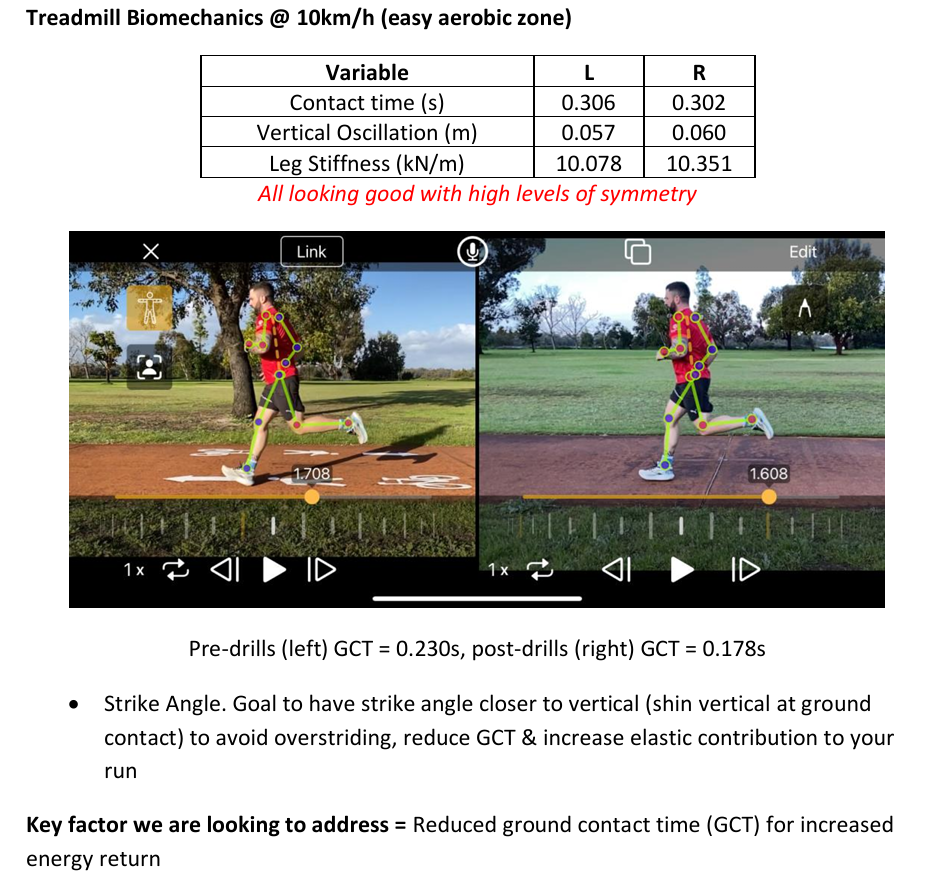
I have been meaning to do it again but I’m time poor and its relatively expensive (around $100) to get it done. As I’m starting to train for a marathon.
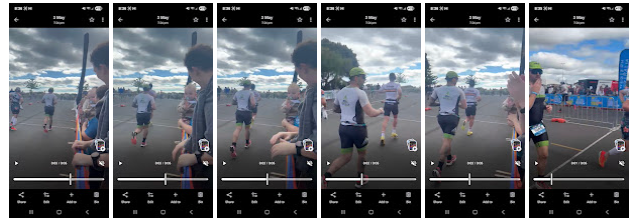
At busso 100 recently one of my friends took a video of me running so I wanted to see if AI could do soe analysis on a very short 5 second video that was not even clear.
ChatGPT AI GAIT Running form Analysis
I upload the video firstly to ChatGPT and what I got back was less than helpful. Here’s how we’ll get you a proper gait analysis instead of vague advice:
Pull 3–5 screenshots from the video at these exact points:
- Foot strike (side view) – when your foot first hits the ground
- Mid-stance (side view) – when your body is over your foot
- Toe-off (side view) – when your foot leaves the ground
- Front/back view – ideally one frame each
Upload those and I’ll give you a detailed breakdown. I did and it was still a terrible response but it did help me refine my prompt a bit more.
AI GAIT Analysis with Gemini
Firstly I uploaded the screenshots but Gemini wanted a video!! After couple of evaluations I got a really good output from my prompt:
You have a very rhythmic, consistent gait, which is great for long-course racing. However, there are a few “energy leaks” we can plug to make you more efficient, especially when the legs are heavy coming off the bike.
Dynamic Gait Observations
1. Knee Drive & “The Shuffle”
Watching the video, your knee drive is quite low. While a low-to-the-ground gait is energy-efficient for long distances, you are relying heavily on your quads and calves to “flick” your feet forward.
- The Fix: Think about driving your knee forward just an extra inch. This creates more space for your foot to land under your center of mass rather than reaching.
2. Rotational Stability (The “Wobble”)
As you pass the camera, look at your torso. There is a slight side-to-side swaying. This usually happens when the core is tired and the arms start swinging across the midline to compensate for balance.
- The Fix: Imagine you are running through a very narrow hallway. Your shoulders and elbows should stay parallel to your direction of travel. Any sideways movement is energy not going toward the finish line.
3. Ground Contact Time
You have a relatively “quiet” footstrike, which is good, but you spend a fraction of a second too long on the ground with each step.
- The Fix: Imagine the pavement is hot coals. You want to “pull” your foot off the ground the moment it touches. Increasing your cadence by even 3-5% can reduce the impact force on your joints significantly.
Efficiency Comparison
| Metric | Observation | Target |
| Vertical Oscillation | Moderate (some “bounce” visible) | Flatter, more forward-directed motion. |
| Arm Swing | High and slightly erratic when waving/distracted | Relaxed, “90-degree” piston motion. |
| Foot Clearance | Very low (typical “Tri-shuffle”) | Slightly higher heel flick to engage hamstrings. |
Recommended “Cues” for your next Brick Session
Since you’re likely training for triathlons, try these cues when you’re 20 minutes into a run:
- “Hip to Pocket”: Keep your hands moving from your hip bone to your shorts pocket. This stops that high-chest tension.
- “Run Tall”: You start to hunch slightly as you look at the crowd. Keep your eyes 10-15 meters ahead on the road to keep your airway open and your spine neutral.
- “Glute Squeeze”: Every kilometer, do a “system check”—engage your glutes for 10 steps to make sure they haven’t “gone to sleep” after the bike leg.
Observation: You’re wearing the ASICS Metaspeed (or a similar carbon-plated racer). These shoes are designed to reward a more aggressive “tip-forward” mechanic. If you lean just slightly more from the ankles (not the waist), you’ll find the carbon plate helps propel you forward more naturally.
How did your legs feel at this specific point in the race—did you feel like you were “fighting” your form at all?
The “Pro-Coach” Gait Analysis Prompt
To get the most out of Gemini’s vision and video analysis capabilities for your running form, you need a prompt that establishes a “Persona” (the coach) and a “Framework” (the specific metrics to look for).